 Materials Used in Making Tai Hei Shakuhachi Materials Used in Making Tai Hei Shakuhachi
|
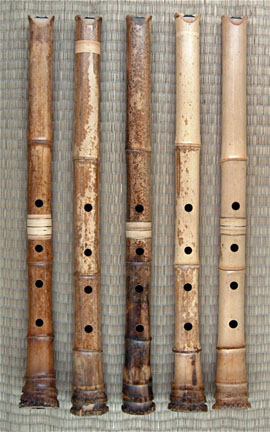 |
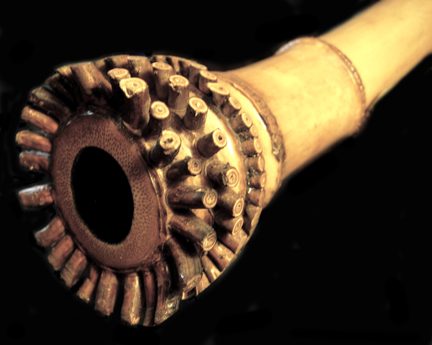
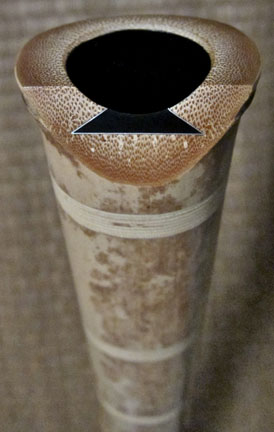
Professional root-end shakuhachi are made of
exceptionally fine madaké bamboo (phyllostachys bambusoides
Sieb. et Zucc.) obtained from established groves in Japan, mainland
China and North America. These quality instruments are also made
from rare Kyushu madaké bamboo whose beautiful color and mottled
exterior conforms to the very highest aesthetic
for shakuhachi in Japan.
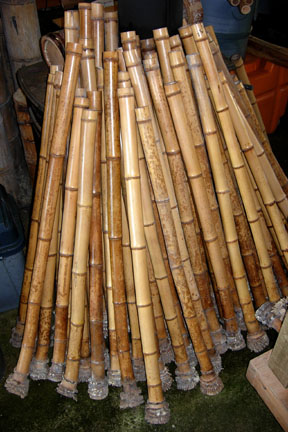
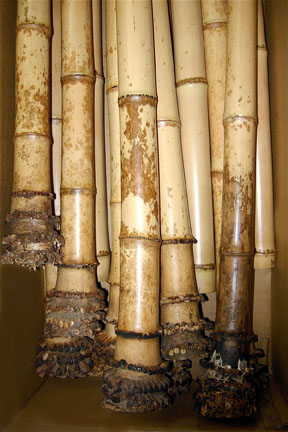
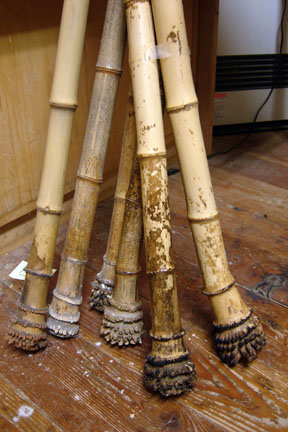
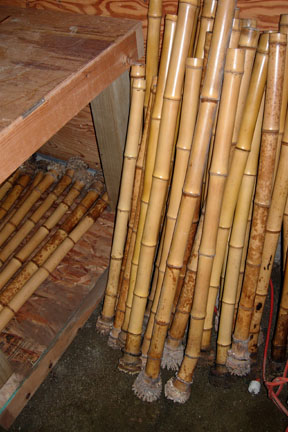
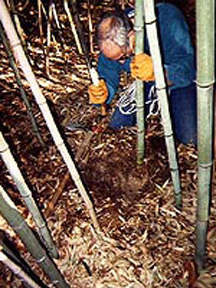
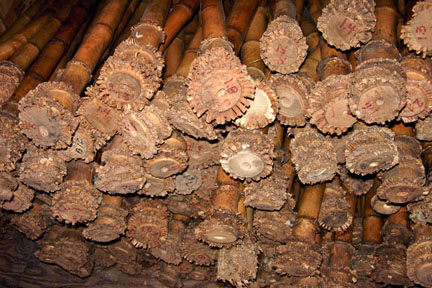
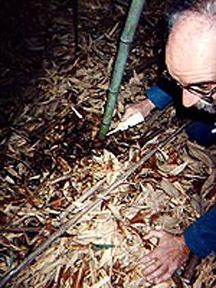
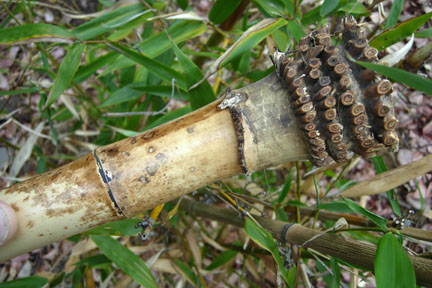
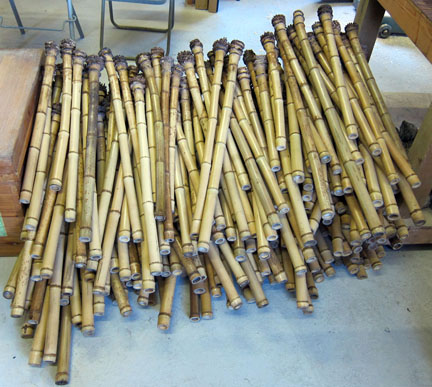
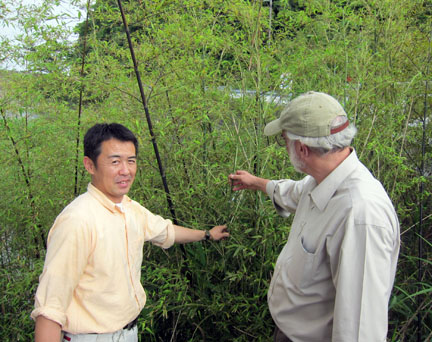
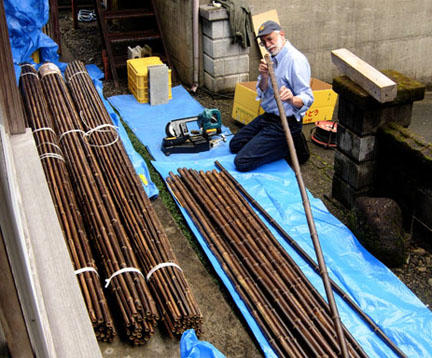
Madaké is a giant timber bamboo most abundant in fertile lowland valleys. Smaller diameter, denser bamboos suitable for flute making are found only in mountainous regions where the soil is poor and conditions for growth are harsh. While madaké is one of the fastest growing plants on Earth -- having been measured at over four feet of growth in one day! -- quality bamboo for flute making is very difficult to find. Exacting specifications demanded by the traditional aesthetic, which considers size, shape, color, root structure and nodal configuration, combine to make the search for shakuhachi bamboo a formidable one. A large grove of madaké provides the maker with only a limited number of usable pieces. Japan's high population density, rampant development and economic organization of traditional craftworks further compound the problem of accessibility. Acquisition of bamboo for shakuhachi is also limited by the fact that harvesting occurs only during winter months before the sap has risen in the plant. All these factors combine to make madaké for shakuhachi a truly precious resource. As a result, Tai Hei Shakuhachi has labored long and hard to locate supplies of this special resource throughout the world. Student & Advanced Student shakuhachi are made from madaké as well as torachiku or Tiger Bamboo (phyllostachys nigra f. punctata), a unique species of black bamboo that is indigenous to Shikoku, the smallest of Japan's main islands. Tai Hei Shakuhachi pioneered the use of torachiku for tradition flute craft. Each piece is carefully chosen, treated and cured in the traditional manner. |
 Madaké & Torachiku Bamboo Madaké & Torachiku Bamboo
|
Madaké Bamboo
| Learn more about |

 Tai Hei Shakuhachi Homepage