|
Bamboo Harvest in Japan Selecting, Digging & Processing |
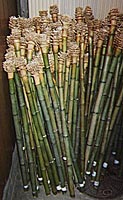

Just returned from two
weeks in Japan where I had pretty good success harvesting bamboo
for shakuhachi. Prior to my departure, I was not at all certain
how things would work out. I only had a couple of leads and knew
from past experience that the entire project boiled down to two
things: an act of faith and a whole lot of leg work. Finding madaké
suitable for shakuhachi is no simple task. Madake Bamboo in Japan The three major species
of bamboo in Japan are moso, hotchiku and madaké, the latter
representing only about 20% of the resource. Even if madaké
can be located, it has to meet rigid specifications dictated by
the traditional aesthetic for shakuhachi. As madaké is
a giant timber bamboo, most of the plants found will be too large
in diameter for flutemaking. Groves of madaké go through
a 60 year cycle. Only very young or very old groves or those growing
in poor soil will yield culms suitable for shakuhachi. In addition,
permission to cut must be secured from the owner of the property
on which the grove is located. This is perhaps the most formidable
obstacle to harvesting bamboo in Japan as very little, if any,
open land exists, other than along riparian ways and river banks.
This bamboo, growing too close to an abundant supply of water,
is not suitable for making shakuhachi. Very few of the makers in Japan harvest their own stock. Most flute craftsmen are based in urban areas and obtain madaké from brokers and middlemen going between the property owners and the makers. I had the opportunity to meet with a couple of bamboo brokers and got a sense of what was involved in harvesting. processing and preparing the bamboo for curing. The task of locating, digging and cleaning the roots, removing the oil from and sterilizing the bamboo to protect it from insect infestation is, indeed, labor intensive. The price of brokered high-quality madaké bamboo ranges from about $100 to $200 per piece with a minimum order of 50 to 100 pieces and no chance for the maker to pick through or select the stock. Bamboo brokers pretty much define the market for this precious resource. Ginetsu Nakamura
Visit to Kyoto On to Shikoku
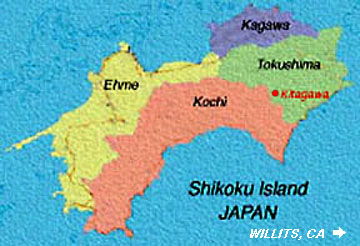
My father-in-law is a farmer who has spent 50 years of his life in the forestry business (He and his wife planted 80,000 cedar trees in a five-year span), growing yuzu (a Japanese citrus) and shitaké mushrooms. In no time at all he became an expert on madaké and, soon, we were off an excursion which took us across the island of Shikoku in search of bamboo for shakuhachi. With the help of Kayo's uncle and a friend of my father-in-law from the Agricultural Union, we found exactly what we were searching for - a place where nothing but madaké grew as far as the eye could see. Quite amazing after viewing only small patches of madaké nestled between large tracts of moso and hotchiku. Plans are underway now to locate appropriately sized groves and return next winter for a major harvest. It appears - if the gods are willing - that I will be able to dig all of my own bamboo for shakuhachi in the years to come. - Monty |
